Table of Contents
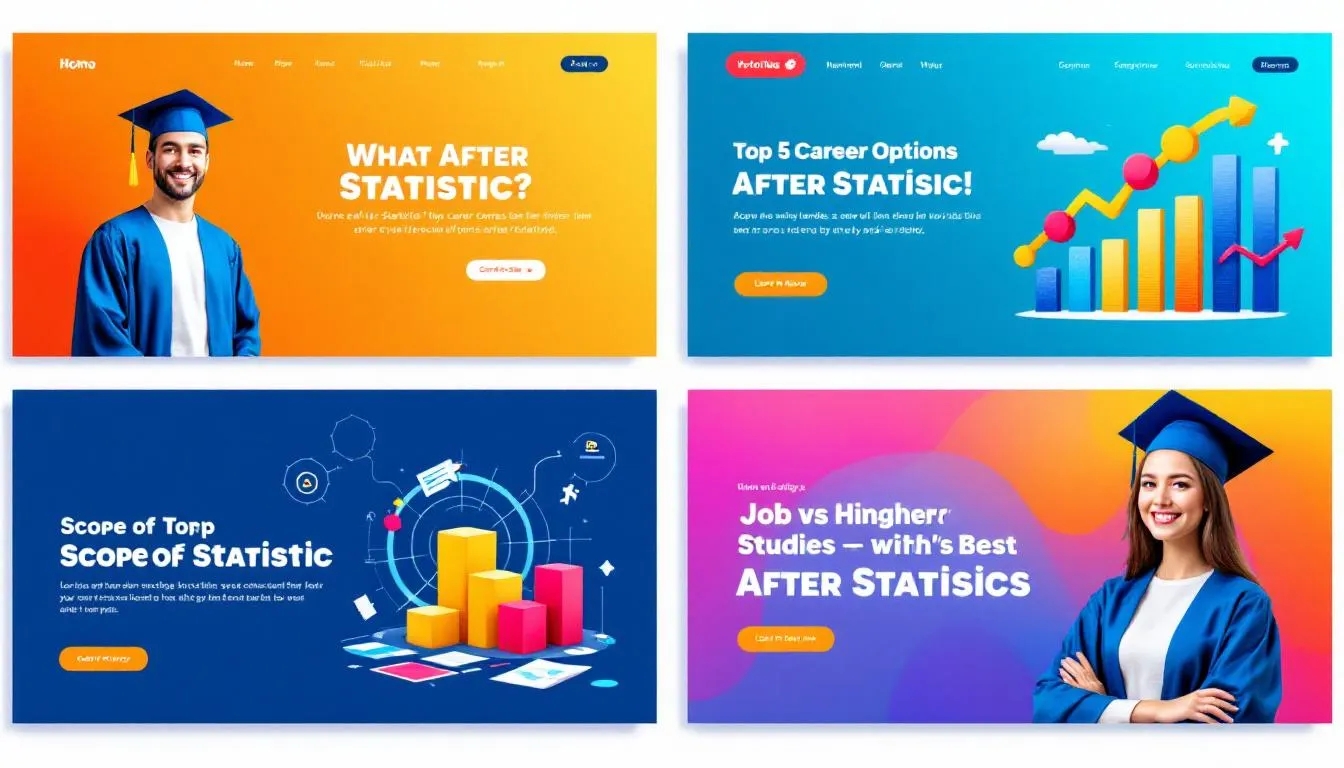
Scope of Statistic, In moment’s digital age, data is more important than ever — and statistics is the language that helps us understand and interpret this data. From tech companies and banks to healthcare and government associations, statisticians are in high demand. This blog dives deep into the compass of statistics as a career, exploring the job request, payment prospects, chops needed, and unborn openings in India and beyond.
What is Statistics
Statistics is a branch of mathematics that involves the collection, analysis, interpretation, donation, and association of data. It’s a vital discipline used to make informed opinions across diligence.
In academics, statistics can be pursued through
B.Sc in Statistics
M.Sc in Statistics
Ph.D. in Statistics
It’s also an integral part of data wisdom, economics, computer wisdom, and engineering programs.
Key Skills You’ll Learn in Statistics
Studying statistics helps build analytical, computational, and problem-solving skills. Some key abilities include:
Data Collection & Sampling Techniques
Descriptive and Inferential Statistics
Probability Theory
Statistical Inference
Regression & Correlation Analysis
Use of Software Tools (R, SPSS, Python, SAS)
Data Visualization
Hypothesis Testing
Mathematical Modeling
Critical Thinking & Logical Reasoning
These skills make statisticians versatile professionals across fields.
Career Scope After Statistics
Statistics offers a wide range of career options in both the public and private sectors. The demand for professionals who can manage, dissect, and interpret large volumes of data is adding fleetly. With a degree in statistics, you can pursue careers in
Data Science & Analytics
Finance & Insurance
Healthcare & Pharma
Education & Research
Government Services
Marketing & Social Research
Artificial Intelligence & Machine Learning
Job Places You Can Explore
After completing a degree in statistics, you can apply for various job places.
| Job Role | Description |
| Statistician | Analyzes data to support decision- making in businesses and governments. |
| Data Critic | Extracts meaningful perceptivity from large datasets. |
| Data Scientist | Applies machine knowledge and predictive models using statistical knowledge. |
| Biostatistician | Works with medical and health- related data. |
| Actuary | Evaluates financial risks using statistical styles. |
| Market Research Analyst | Studies request conditions and consumer behavior. |
| Quantitative Critic | Applies statistical styles in finance and trading. |
| Risk Analyst | Assesses trouble in finance, banking, and insurance. |
| Operations Research Analyst | Optimizes processes using statistical and fine modeling. |
| Academic/Researcher | Conducts research or teaches in colleges and universities. |
Average Salary After Statistics in India
The salary you earn after studying statistics depends on your role, experience, and industry. Here’s a general overview:
| Job Role | Average Salary (INR/year) |
|---|---|
| Statistician | ₹3.5 – ₹8 LPA |
| Data Analyst | ₹4 – ₹9 LPA |
| Data Scientist | ₹6 – ₹12 LPA |
| Biostatistician | ₹5 – ₹10 LPA |
| Actuary | ₹8 – ₹15 LPA |
| Quantitative Analyst | ₹6 – ₹20 LPA |
| Research Associate | ₹3 – ₹6 LPA |
Top Recruiters / Hiring Companies
Graduates in statistics are hired by top organizations in various sectors. Leading recruiters include:
Private Sector:
- TCS, Infosys, IBM, Accenture
- Deloitte, KPMG, PwC, EY
- Google, Amazon, Microsoft, Flipkart
- ICICI, HDFC, SBI, Axis Bank
- Zomato, Swiggy, Ola, Paytm
Government Sector:
DRDO, ISRO, and other research agencies
Indian Statistical Services (ISS)
Ministry of Statistics and Programme Implementation (MoSPI)
Reserve Bank of India (RBI)
Indian Council of Medical Research (ICMR)
Future Growth in This Field
The future of statistics is bright due to the growing importance of data in decision-making:
- Data Science Boom: As data science grows, so does the need for statistics experts.
- AI and Machine Learning: These fields heavily depend on statistical algorithms.
- Healthcare Expansion: Biostatisticians are essential for clinical research and epidemiology.
- Global Demand: Countries like the USA, UK, Canada, and Australia are hiring statisticians at high salaries.
- Research & Academics: Universities and think tanks need trained statisticians for ongoing projects.
According to international forecasts, careers in statistics are expected to grow by over 30% in the next decade.
Who Should Pursue Statistics?
This course is ideal for individuals who:
- Enjoy working with numbers, data, and patterns.
- Have strong analytical and problem-solving abilities.
- Are curious about trends, forecasts, and predictions.
- Want a flexible career applicable to multiple industries.
- Seek a profession in research, analytics, or teaching.
Recommended Background: Students from science, commerce, or economics with mathematics in 12th grade are suitable for this field.
Statistics Course Structure / Subjects Covered
Here’s a typical curriculum overview for B.Sc./M.Sc. in Statistics:
| Core Subjects | Advanced/Applied Subjects |
|---|---|
| Probability & Probability Distributions | Multivariate Analysis |
| Descriptive & Inferential Statistics | Bayesian Statistics |
| Regression & Correlation Analysis | Data Mining & Data Warehousing |
| Sampling Techniques | Biostatistics |
| Statistical Inference | Machine Learning Basics |
| Time Series Analysis | Econometrics |
| Linear Algebra & Calculus | Statistical Computing (R, Python) |
| Design of Experiments | Project Work & Dissertation |
Many courses include internships, lab sessions, and use of tools like Excel, SPSS, SAS, and R.
Top Institutes in India Offering Statistics
Top institutions offering undergraduate and postgraduate degrees in statistics include:
- Indian Statistical Institute (ISI), Kolkata
- Delhi University (DU)
- Jawaharlal Nehru University (JNU)
- Banaras Hindu University (BHU)
- University of Calcutta
- Indian Institutes of Technology (IITs)
- Jadavpur University, Kolkata
- St. Xavier’s College, Mumbai/Kolkata
- Madras Christian College (MCC), Chennai
- Aligarh Muslim University (AMU)
These institutes offer excellent academic infrastructure, placement opportunities, and research exposure.
Online vs Offline – Which Mode is Better?
| Parameter | Online Mode | Offline Mode |
|---|---|---|
| Flexibility | Learn anytime, anywhere | Fixed schedules, physical attendance |
| Cost | Affordable | Higher tuition and accommodation expenses |
| Practical Exposure | Simulations and online tools | Real lab experiments and peer learning |
| Peer Interaction | Limited | Strong peer and faculty network |
| Best For | Working professionals and upskilling | Full-time students aiming for academic rigor |
FAQs About Statistics
Q1. Is statistics a good career choice?
Yes. It offers high demand, career diversity, and strong earning potential.
Q2. Can I pursue data science after statistics?
Absolutely. Statistics forms the core of data science and machine learning.
Q3. Is a B.Sc. in Statistics enough for a good job?
Yes, especially with internships and tool-based skills. An M.Sc. or certification can further enhance opportunities.
Q4. Is government employment available for statisticians?
Yes, through Indian Statistical Services (ISS) and various state/national departments.
Q5. Do I need coding skills in statistics?
Basic knowledge of programming in R, Python, or SQL is highly beneficial for modern roles.
Conclusion
The scope of statistics is vast and expanding rapidly. With data becoming central to every business and research function, statisticians are key players in the modern workforce. From analyzing stock markets to predicting disease outbreaks, their work is both impactful and intellectually rewarding.
If you have a passion for numbers, patterns, and problem-solving, a career in statistics can offer job security, high salary, diverse opportunities, and global reach.