

Introduction:
Scope of data Analytics is the process of looking through, classifying, and analysing unprocessed data to find patterns, trends, and insights that help with decision-making is known as data analytics. In order to turn data into knowledge that can be put to use, statistical methods, machine learning algorithms, and data visualisation tools are used.
Businesses, governments, the healthcare sector, and other sectors use data analytics to boost customer satisfaction, predict results, increase efficiency, and obtain a competitive advantage in today’s data-driven world. The core types of data analytics include descriptive, diagnostic, predictive, and prescriptive analytics. From comprehending what has transpired to suggesting actions based on future projections, each type has a distinct function.
Data analytics is now an essential skill and career path in the digital economy due to the growth of big data and cutting-edge technologies.
Table of Contents
Scope of Data Analytics:
The explosion of data and the demand for data-driven decision-making have led to a broad and quick expansion of data analytics across industries. Key areas illustrating its scope are as follows:
1. Industry Applications:
- Business & Finance: Stock market forecasting, fraud detection, risk management, and customer behaviour analysis.
- Healthcare: Disease prediction, patient data analysis, and operational effectiveness.
- Retail and e-commerce: Sales forecasting, Recommendation systems, Inventory management.
- Manufacturing: supply chain optimisation and predictive maintenance.
- Education: Monitoring student performance and the efficacy of the curriculum.
- Government & Public Sector: Data analysis from censuses, public safety analytics, and policy planning.
2. Functional Scope:
- Descriptive Analytics – Understanding historical data.
- Diagnostic Analytics – Identifying patterns and causes.
- Predictive Analytics – Forecasting future events.
- Prescriptive Analytics – Suggesting next best actions.
3. Tools & Technologies:
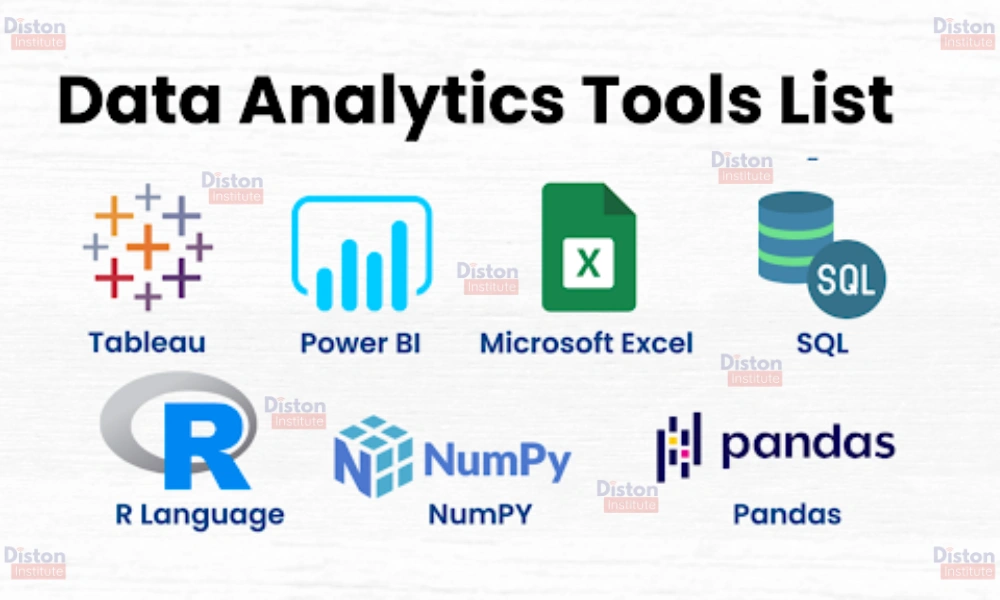
- Programming: Python, R
- Tools: Excel, Tableau, Power BI, SQL
- Big Data Platforms: Hadoop, Spark
- Cloud: AWS, Google Cloud, Azure
4. Global Demand:
There is a strong worldwide need for qualified data professionals in a variety of industries due to the growing significance of big data. To stay competitive, businesses are making significant investments in analytics.
Career opportunity After Data Analytics:
Numerous high-growth job opportunities across industries are made possible by a career in data analytics. Professionals with expertise in this area are highly sought after as businesses depend more and more on data to inform their decisions.
Top Career Options in Data Analytics:
| Role | Key Responsibilities | Average Salary (INR) |
|---|---|---|
| Data Analyst | Interpret data, generate reports, identify trends | ₹4 – ₹8 LPA |
| Business Analyst | Bridge business needs with data insights | ₹5 – ₹10 LPA |
| Data Scientist | Build models, use machine learning for predictions | ₹8 – ₹20+ LPA |
| Data Engineer | Build and manage data pipelines and architecture | ₹6 – ₹15 LPA |
| BI Analyst (Business Intelligence) | Create dashboards, use BI tools for reporting | ₹5 – ₹12 LPA |
| Machine Learning Engineer | Build and deploy ML models | ₹10 – ₹25+ LPA |
| Statistician | Perform statistical analysis and research | ₹4 – ₹10 LPA |
| Data Consultant | Advise businesses on data strategies and tools | ₹8 – ₹18 LPA |
Industries Hiring Data Analytics Professionals:
- IT & Software
- Banking & Finance
- E-commerce
- Healthcare
- Retail & FMCG
- Telecom
- Manufacturing
- Government & Public Sector
Future Trends:
- Rise of AI & machine learning
- Growth of cloud-based analytics
- Increasing use of real-time data processing
- Demand for data privacy and ethical analytics
How Diston Institute Helps You
Through a structured, experiential learning approach, our institute is committed to giving students data analytics skills that are relevant to the industry. We provide hands-on training in data visualisation, statistical analysis, and machine learning in addition to a thorough curriculum that covers fundamental tools like Excel, SQL, Python, Tableau, and Power BI.
Expert faculty mentoring, practical projects, internships, and career services like interview and resume writing are all advantageous to students. Our program makes sure you’re prepared to meet the increasing demand for data professionals across sectors by providing you with access to industry case studies and the newest tools.
Our institute offers the information and assistance you need to launch a lucrative career in data analytics, regardless of your level of experience.
We providing you Data Analytics Course in Dehradun, Let’s Join Us….
Conclusion:
In the current digital era, data analytics has become a potent tool that helps businesses make data-driven decisions. It turns unstructured data into insightful knowledge that propels productivity, creativity, and competitive advantage in every industry.
Data analytics is not only a career path but also a vital force for growth and change due to its numerous applications in business, healthcare, finance, education, and other fields. The breadth and significance of data analytics will only grow as technology advances, making it a lucrative and future-proof career choice for experts.
FAQ’s About Data Analytics:
1. Is Data Analytics the same as Data Science?
No. Data analytics focuses on interpreting existing data, while data science includes building models, algorithms, and making predictions using data.
2. What is the average salary of a Data Analyst in India?
Entry-level: ₹4–₹6 LPA
Professionals with experience: ₹8 to ₹15+ LPA (may be higher with advanced skills)
3. Do I need a technical background to start in Data Analytics?
Not always. Although having a technical background is beneficial, many non-tech professionals improve their skills by taking classes and earning certifications.
4. What is the future scope of Data Analytics?
incredibly bright, with expanding uses in real-time analytics, cloud computing, artificial intelligence, and the Internet of Things.
5. How can I start a career in Data Analytics?
To begin building your portfolio, learn tools (such as Excel, SQL, and Python), earn certifications (such as Google Data Analytics, Coursera, and edX), and work on real-world projects.