
Introduction
Language is the bridge that connects people, cultures, and ideas. Among thousands of languages spoken across the world, English holds a unique place as a global language. It is not only used in schools and universities but also in workplaces, international businesses, and even in casual conversations across borders. Spoken English refers to the ability to communicate effectively in English through speech. Unlike written English, which focuses on grammar and structure, spoken English emphasises fluency, pronunciation, tone, and confidence.
In today’s competitive environment, the ability to speak English fluently has become a vital life skill. Whether you are a student, a job seeker, or a business professional, mastering spoken English can significantly enhance your personal and professional growth.

Table of Contents
What is Spoken English?
Spoken English means using English as a medium of verbal communication. It is not about being perfect in grammar or using advanced vocabulary, but about expressing thoughts clearly, confidently, and naturally. Spoken English refers to the verbal form of the language used for everyday communication. It is more conversational and less formal than written English. Improving your skills in this area requires a focus on regular practice, listening, and gaining confidence.
Key elements of spoken English include:
Fluency – Speaking smoothly without unnecessary pauses.
Pronunciation – Correctly pronouncing words to avoid confusion.
Tone & Accent – Speaking in a natural, polite, and understandable way.
Listening Skills – Understanding others’ English to respond effectively.
Spoken English is different from academic English. While academic English focuses on essays, reports, and formal writing, spoken English is about day-to-day communication, interviews, presentations, and public speaking.
Importance of Spoken English
1. A Global Language
English is the most widely spoken second language in the world. It is the official or dominant language in over 50 countries. Being fluent in spoken English allows you to connect with people worldwide, making it essential for travel, study, and business.
2. Education and Learning Opportunities
Most international universities, research papers, and online courses are available in English. A student with strong spoken English skills can perform better in group discussions, classroom participation, and presentations.
3. Career Growth and Employability
Employers across industries prefer candidates who can speak English fluently. It shows confidence, communication skills, and professionalism. In fields like IT, tourism, hospitality, aviation, and corporate sectors, spoken English is often a minimum requirement.
4. Boosts Confidence and Personality
Speaking English fluently boosts self-esteem. It makes social interactions easier, helps in networking, and develops leadership qualities. A confident speaker often leaves a lasting impression in interviews and professional meetings.
5. Digital and Social Media Communication
Most content on the internet—blogs, videos, tutorials, and business websites—is in English. Having spoken English skills allows you to actively participate in online communities, webinars, and international collaborations.
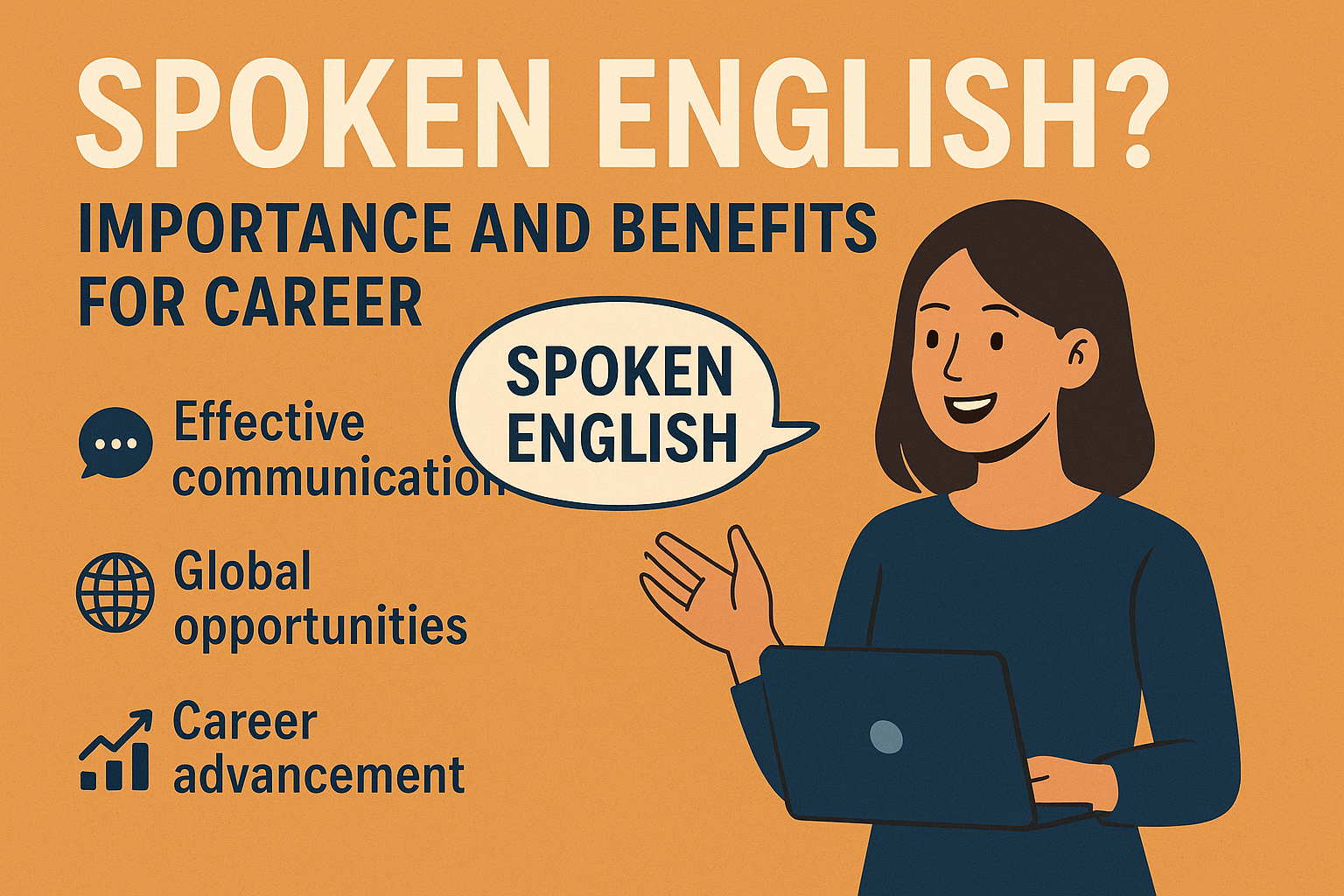
Benefits of Spoken English for a Career
1. Better Job Opportunities
Fluency in spoken English opens doors to job opportunities in multinational companies, BPOs, corporate sectors, and government jobs. Many companies shortlist candidates based on their ability to communicate in English during interviews.
2. Career Advancement
Even after securing a job, English fluency helps professionals in career growth. Whether it’s giving a presentation, attending a meeting, or handling international clients, spoken English gives a competitive edge.
3. Higher Salary Packages
Employees with strong spoken English skills often receive better salary packages compared to others. Communication skills are seen as an added asset that makes professionals more valuable to organizations.
4. Global Mobility
Fluent English speakers have more chances of working abroad. Since English is widely used in corporate and academic sectors, it becomes easier for professionals to relocate and explore international opportunities.
5. Effective Leadership and Teamwork
Good communication is the foundation of leadership. Leaders who can speak English fluently are better able to inspire, guide, and manage teams effectively. It also makes cross-cultural teamwork smooth and productive.
How to Improve Spoken English

- Practice Daily – Speak English with friends, colleagues, or mentors regularly.
- Think in English – Instead of translating from your mother tongue, try forming thoughts directly in English.
- Read and Listen – Newspapers, podcasts, and English shows help in vocabulary building and pronunciation.
- Record Yourself – Practice speaking and listen to your own recordings to identify mistakes.
- Join Spoken English Classes – Professional courses can help in structured learning.
- Use Technology – Apps like Duolingo, Hello English, and FluentU make daily practice easy.
Real-Life Examples
- A student who studied in a Hindi-medium school struggled in interviews. After practicing spoken English for six months, he secured a job in a multinational company.
- A homemaker started giving online yoga classes in English and gained international students.
- An engineer improved his spoken English and got promoted to lead international projects in his company.
These examples show how spoken English directly contributes to career success.
Spoken English in India
In India, English is not just a language but also a career tool. It is widely used in education, corporate environments, and government sectors. With globalization, the demand for fluent English speakers is rising in IT hubs like Bengaluru, Hyderabad, Dehradun, Pune, and Delhi NCR.
Government and private institutes are also offering spoken English courses at affordable prices to help students and professionals improve their communication skills.

Conclusion
Spoken English is more than just a communication skill—it is a career-building asset. It improves confidence, opens up international opportunities, and enhances personality. In a world where global communication matters, spoken English acts as the gateway to success.
Whether you are a student, a professional, or someone aiming to improve your lifestyle, investing time in learning spoken English can transform your future. The importance of spoken English will only continue to grow, making it one of the most valuable skills of the 21st century.